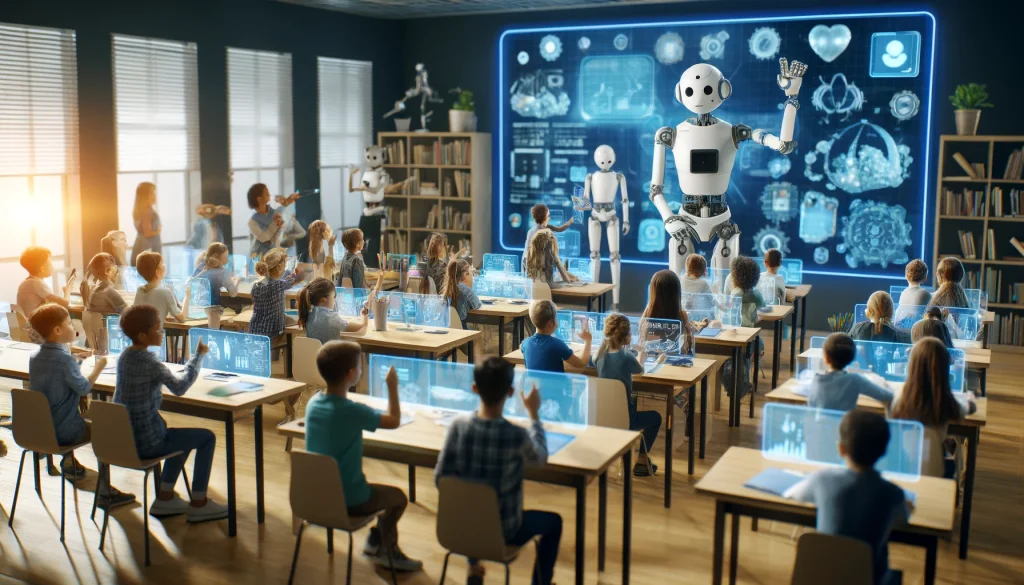
Let’s get real—AI is reshaping education and it’s no longer just fodder for sci-fi. Schools are morphing into tech havens, with AI tools popping up from corner to corner. It’s about making learning smarter, not harder.
Personalized Learning: Tailored Like Your Social Media Feed
Just as algorithms predict what you like to see online, AI in education customizes learning to fit each student’s style and pace. Tools like DreamBox Learning harness AI to adapt lessons in real time, making sure students aren’t just learning, but thriving.
AI as a Teacher’s Assistant: The Ultimate Helper
Think of AI as the ultimate assistant for teachers—handling everything from grading to scheduling so educators can focus on, well, educating. Gradescope automates assessments, offering feedback that’s not just quick but incredibly detailed, making a teacher’s life a bit easier.
Interactive Learning Tools: Learning That Sticks
Interactive AI tools like Carnegie Learning’s digital platforms engage students in a way traditional methods may not. These platforms use AI to pose challenges and adapt scenarios in real-time, enhancing critical thinking skills while making learning genuinely fun.
AI for Special Needs: Leveling the Educational Playing Field
AI is a game-changer for special needs education. Apps like Proloquo2Go help non-verbal students communicate through symbols and text-to-speech technology, opening up new avenues for expression and interaction.
Language Learning: Breaking Down Barriers
AI is revolutionizing language learning too, making mastering a new language less daunting. Duolingo, with its AI-driven lessons, offers personalized practice and feedback, turning language barriers into bridges.
The Global Classroom: Education Without Borders
AI is also demolishing geographical and language barriers in education. Tools like Microsoft Translator enable real-time translation of lessons and discussions, creating a truly global classroom.
Overcoming Challenges: Navigating the AI Maze
But it’s not all smooth sailing. The integration of AI in education comes with its share of challenges—data privacy, ethical concerns, and the fear of AI bias. Balancing technology with the irreplaceable human touch of educators is crucial. We must tread carefully to harness AI’s potential responsibly.
Preparing for the Future: Educators and AI
As AI becomes a staple in educational settings, preparing educators to use these tools effectively is essential. Training programs and curricula need updating to include AI literacy, ensuring that teachers aren’t just users but savvy operators.
AI in Career Preparation: Beyond Academics
AI doesn’t just prepare students academically; it also equips them for the future workplace. AI-driven career guidance systems can help students identify paths that align with their skills and interests, potentially transforming the concept of career planning.
Conclusion
AI is undeniably transforming education, making it more personalized, engaging, and inclusive. However, as we embrace these advancements, we must remain vigilant about the ethical use of technology and maintain the human connection that is at the heart of education.
This revamped version of the article broadens the scope of references, adds links to the mentioned tools, and maintains a conversational tone to keep the discussion lively and engaging, ensuring readers can relate to and understand the implications of AI in education.